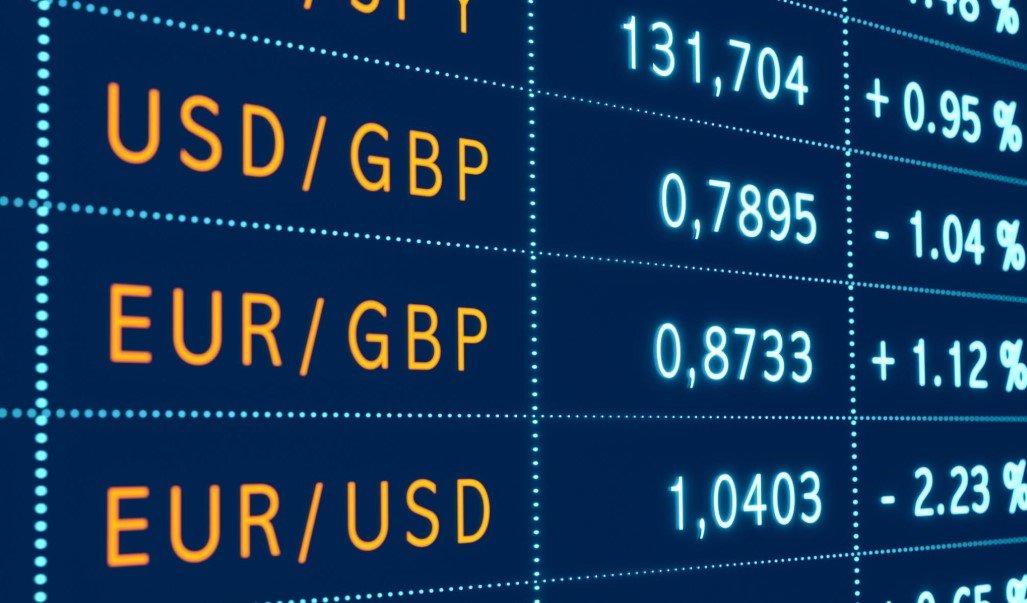
The foreign exchange market, commonly known as forex, allows traders, businesses, and investors to exchange one currency for another. Among the most closely watched currency pairs are EUR/USD, which compares the euro with the US dollar, and GBP/USD, which compares the British pound with the US dollar.
The EUR/USD and GBP/USD exchange rates respond to a wide range of economic and political factors. Interest rate decisions, inflation reports, employment figures, and geopolitical developments can all influence how these currencies perform against each other.
Understanding these drivers can help traders interpret market movements and make more informed decisions. However, exchange rates are influenced by several factors simultaneously, meaning no single indicator can reliably predict every price movement.
Understanding EUR/USD and GBP/USD
A currency pair shows the value of one currency relative to another. In EUR/USD, the euro is the base currency and the US dollar is the quote currency. In GBP/USD, the British pound is the base currency and the US dollar is the quote currency.
For example, if EUR/USD trades at 1.1000, one euro is worth 1.10 US dollars. If the exchange rate rises to 1.1100, the euro has strengthened against the dollar. If it falls to 1.0900, the euro has weakened against the dollar.
The same principle applies to GBP/USD. A rising exchange rate indicates that the pound is gaining value against the dollar, while a falling rate indicates that the pound is losing value relative to it.
Forex traders often measure small exchange rate movements in pips. For most non-JPY currency pairs, one pip is 0.0001. A move in EUR/USD from 1.1000 to 1.1050 represents a rise of 50 pips.
These pairs attract significant attention because they involve major global economies and are widely traded. Their liquidity can create trading opportunities, but prices can still change rapidly when important news is released.
The Role of Central Banks
Central bank policies are among the most important influences on currency values. The European Central Bank (ECB), Bank of England (BoE), and US Federal Reserve (Fed) make decisions that affect interest rates, borrowing costs, inflation expectations, and international investment flows.
European Central Bank Policy
The ECB sets monetary policy for the euro area, with the objective of maintaining price stability. When markets expect the ECB to raise interest rates, the euro may strengthen as euro-denominated assets become more attractive to investors.
Conversely, expectations of rate cuts can put downward pressure on the euro, particularly if other central banks are expected to maintain higher rates.
However, the market’s reaction depends on expectations. If a rate increase has already been anticipated, the euro may not rise after the announcement. Investors also pay attention to the ECB’s outlook for inflation and economic growth.
Bank of England Policy
The Bank of England influences GBP/USD through its decisions on UK interest rates and its assessment of inflation and economic conditions.
Higher UK interest rates can support the pound by increasing the potential return on pound-denominated investments. However, if rates rise because inflation is persistently high or the economy is under pressure, the effect on sterling may be less positive.
Traders also monitor speeches and policy statements from BoE officials for clues about future decisions.
US Federal Reserve Decisions
The Federal Reserve plays a major role in both EUR/USD and GBP/USD because the US dollar is the quote currency in these pairs.
When the Fed signals that interest rates may remain high, the dollar can strengthen if investors expect better returns on US assets. Expectations of lower rates may weaken the dollar, depending on conditions in other economies.
For traders, the key issue is often the difference between expected monetary policy in the United States and Europe or the United Kingdom—not simply whether a central bank raises or lowers rates.
How Economic Data Influences Currency Prices
Economic reports provide clues about the health of an economy and the likely direction of monetary policy.
Inflation and employment: Inflation reports help traders estimate whether central banks may tighten or ease monetary policy. Strong employment figures can suggest economic resilience and potentially support expectations for higher interest rates. Weak employment or falling inflation may encourage expectations of rate cuts.
GDP growth and retail sales: Gross domestic product measures economic output, while retail sales offer insight into consumer spending. Strong UK economic data may support GBP/USD, while stronger-than-expected eurozone data may support EUR/USD. The dollar can also gain when US data outperforms expectations.
Interest rate expectations: Markets respond not only to current economic conditions but also to forecasts. A report that differs significantly from expectations can trigger sharp currency movements, particularly when it changes the anticipated path of interest rates.
The same economic release can affect currency pairs differently depending on the broader situation. For example, disappointing US data could weaken the dollar, but investors seeking safety during a global crisis may still buy dollars.
Political Events and Market Sentiment
Political developments can create uncertainty and increase currency volatility. Elections, government spending plans, tax changes, and debates over public debt may influence investor confidence.
In the United Kingdom, uncertainty surrounding fiscal policy or major regulatory changes can affect sterling. In the euro area, political developments in individual member countries may influence confidence in the region’s economic outlook.
Trade negotiations, tariffs, international conflicts, and geopolitical tensions can also affect exchange rates by changing expectations for growth and investment.
Market sentiment matters as well. During periods of uncertainty, investors may seek assets they consider safer, often including the US dollar. This can put pressure on EUR/USD and GBP/USD even when European or British economic data has not changed significantly.
Nevertheless, safe-haven demand is not automatic. Currency movements depend on the source of the uncertainty, market positioning, and how investors assess the risks involved.
How to Analyze EUR/USD and GBP/USD
Traders commonly combine several methods to evaluate potential currency movements.
Fundamental Analysis
Fundamental analysis examines economic indicators, central bank communications, inflation trends, employment data, and political developments. Comparing conditions in the United States with those in the euro area and the United Kingdom can help traders understand why a currency pair may be strengthening or weakening.
Technical Indicators and Price Charts
Technical analysis uses price charts to identify trends and potential support and resistance levels. Traders may use moving averages, the Relative Strength Index (RSI), and other indicators to evaluate momentum or identify possible entry and exit points.
These tools describe price behavior rather than guarantee future results. Technical signals can fail, especially when unexpected news causes rapid market movements.
Economic Calendars and Risk Management
An economic calendar helps traders prepare for scheduled releases, including inflation figures, employment reports, GDP data, and central bank announcements.
Risk management is equally important. Traders may use stop-loss orders, limit position sizes, and avoid taking excessive exposure around major announcements. Stop-loss orders can help manage risk, although execution prices are not guaranteed during periods of low liquidity or market gaps.
Because EUR/USD and GBP/USD can be volatile, traders should consider their financial objectives, experience, and tolerance for losses before entering a position.
Conclusion
The EUR/USD and GBP/USD exchange rates are shaped by the interaction of monetary policy, economic data, political developments, and market sentiment. Interest rate expectations are particularly important, but inflation, employment, economic growth, and global uncertainty can all influence currency movements.
Rather than relying on a single indicator or prediction, traders should compare economic conditions across the regions involved and combine fundamental analysis with price-chart analysis and disciplined risk management.
A well-rounded approach can help investors better understand forex market behavior, although it cannot eliminate uncertainty or guarantee profitable trades.
Frequently Asked Questions
What makes EUR/USD go up or down?
EUR/USD changes when the euro’s value changes relative to the US dollar. Interest rate expectations, economic reports, central bank decisions, and investor sentiment can all influence the pair.
What affects GBP/USD the most?
GBP/USD is influenced by Bank of England and Federal Reserve policies, UK and US economic data, inflation expectations, and political or geopolitical developments. The relative outlook for both economies is especially important.
How do interest rates affect currency exchange rates?
Higher expected interest rates can attract capital toward a currency by increasing potential returns. However, the effect depends on what markets already expect and on other economic and financial conditions.
Is EUR/USD easier to trade than GBP/USD?
EUR/USD generally benefits from very high trading liquidity, while GBP/USD can experience sharper movements during certain economic announcements. Neither pair is automatically easier or safer to trade.
Can economic news cause sudden forex movements?
Yes. Unexpected inflation reports, employment figures, central bank announcements, and political developments can cause rapid price changes. Traders should be aware of scheduled events and the risk of increased volatility.